Building Real-Time Customer Support in Flutter Apps: Best Practices
In-app customer support has become a requirement for modern mobile products. Whether you are building a consumer app, SaaS platform, marketplace, or fintech application, real-time communication can dramatically improve user satisfaction, retention, and onboarding.
Flutter developers today have access to tools ranging from live chat SDKs to AI-driven support systems. This guide covers how real-time support works in Flutter, what patterns to follow, and which SDKs can help you ship faster without maintaining a full support stack.
Why Real-Time Support Matters
If users cannot find answers fast, they churn. Traditional email-based support or external help centers create friction. Real-time support lets users get answers directly inside the app, right at the moment they experience an issue.
Fast communication increases:
- Customer satisfaction
- Retention and lifetime value
- Conversion and onboarding success
- Visibility into bugs and crashes
- Feedback loops for feature decisions
For apps with paid plans or high-touch funnels, real-time support is often directly tied to revenue.
Key Components of a Real-Time Support System
A complete support experience requires multiple layers working together:
1. Live Chat
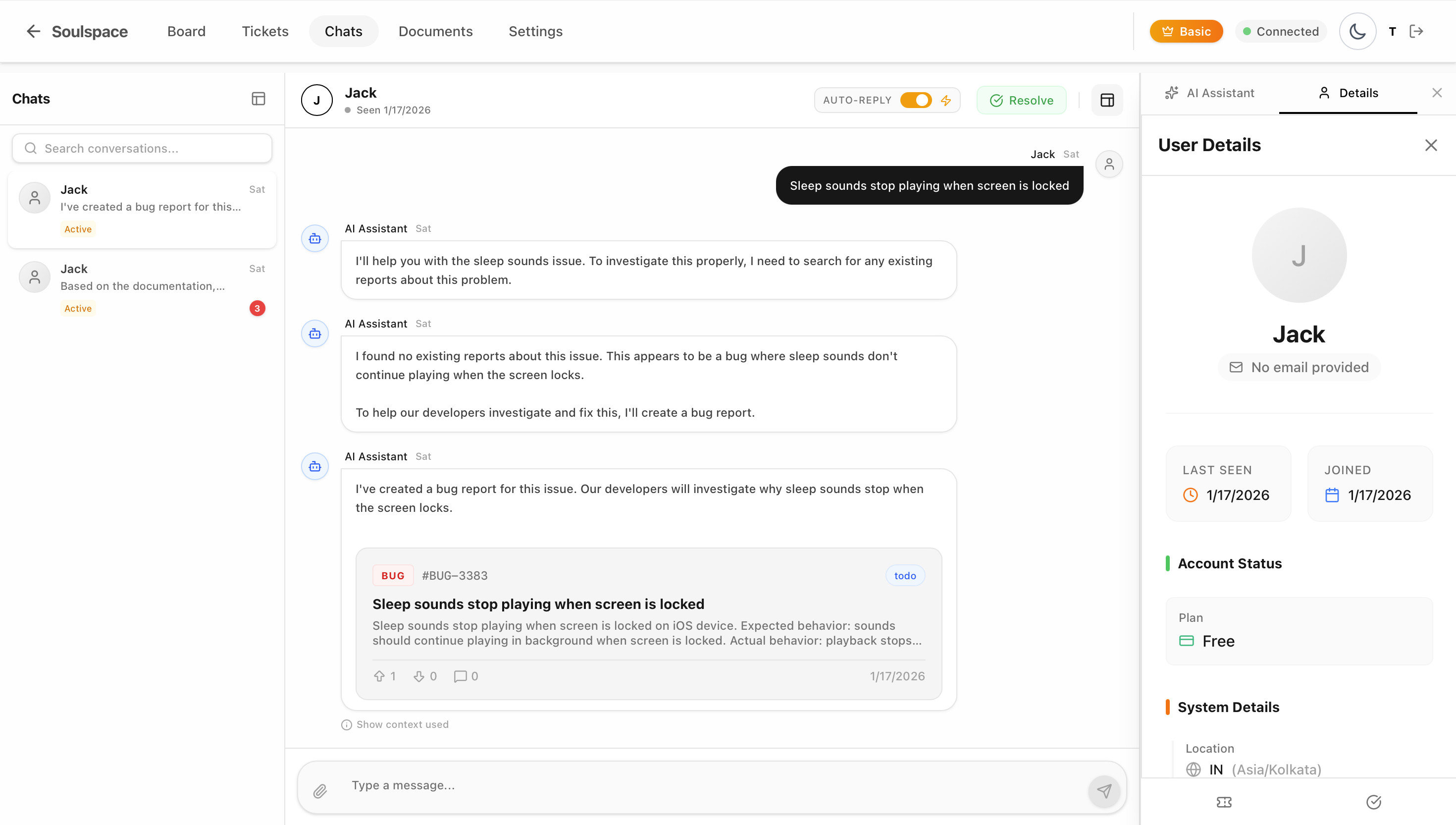
Live chat allows agents or founders to directly answer user questions within the app. Flutter SDKs can expose chat UIs, message history, and push notifications.
Important considerations:
- Native-feeling UI
- Offline sync capabilities
- Push notifications
- Typing indicators and read receipts
2. Ticketing and Escalation
When no agent is available, conversations should escalate to support tickets. This prevents lost feedback and ensures users receive responses even hours later.
3. Automated Responses and AI
AI-powered assistants can handle repetitive questions, reduce support volume, and provide documentation-style answers immediately.
Useful for:
- FAQs
- Account & billing questions
- Bug report triage
- Feature explanation
4. Bug and Crash Reporting
Support chats often surface real issues first. Automatically attaching logs or context saves engineering time and reduces back-and-forth friction.
5. Feedback & Feature Requests
Support is not only about problems. Users frequently request new ideas. Capturing that data helps shape product direction.
Technical Best Practices for Flutter Integration
When implementing support in a Flutter app, developers should follow several architectural best practices.
Use Stream-Based Messaging Architectures
Live chat requires stream-driven updates. Avoid polling APIs. Leverage:
- WebSockets
- Server-Sent Events (SSE)
- gRPC streams
Flutter’s reactive UI model pairs well with stream-based systems.
Maintain a Local Message Cache
Users expect message history to load instantly. Persist messages locally and sync with server when the device reconnects.
Avoid Blocking UI for Network Operations
Do not assume availability or perfect network conditions. Queue outbound messages and retry on failure.
Push Notifications are Mandatory
If support messages can be delayed or missed, real-time value collapses. Push integration ensures agents can reply asynchronously, and users can re-enter easily.
Respect Mobile UX Patterns
Web-style support widgets feel awkward on mobile. A proper in-app experience should feel native, fast, and accessible.
Should You Build or Buy?
Teams often debate maintaining their own support systems. Building in-house requires:
- Real-time messaging infrastructure
- Chat UIs and push systems
- Ticketing and state management
- Admin support dashboards
- AI and automated responses
- Scaling and reliability operations
This can take months of engineering effort and long-term maintenance. For most apps, SDK solutions are more practical.
SDK Options for Flutter
Popular options include:
- Intercom (Web-oriented, limited mobile-first features)
- Zendesk (Enterprise-focused)
- Freshchat (General live chat)
- Feeddo (AI-driven + mobile-first Flutter SDK)
- Custom-built WebSocket chat
The right choice depends on cost, roadmap, and expected support volume.
Conclusion
Real-time customer support is no longer a luxury feature for Flutter apps. It is a competitive differentiator that improves retention, reduces churn, and accelerates product development. Developers should focus on mobile-native UX, asynchronous communication, and automated workflows to build modern support experiences.
If you are looking for a Flutter-first solution, consider testing Feeddo — an AI-powered in-app support SDK designed specifically for mobile applications.
You can learn more at feeddo.dev.